
Every scooter or moped owner knows that the better you look after it, the better it will carry you. That's why we try to do everything we can to improve and extend the life of our trusty two-wheeler: we fill up with good gasoline, don't skimp on oil, adjust various components and systems as needed, and so on.
Unfortunately, though, some riders forget about their bikes in winter, or right before it. And when spring comes, they expect it to start first time and ride off. But problems often begin precisely in spring, when the motorcycle season opens. Either the carburetor needs cleaning, or the ignition is acting up, or the piston kit needs replacing altogether. Yet some of these problems can be prevented. To do that, you need to prepare your moped properly for winter, or, as people say, put it into storage.
Here are some general recommendations for storing a scooter, plus tips from personal experience. So, here's what you need to do:
- First, pick the right day: the weather should be dry, preferably sunny.
- Wash and dry the moped thoroughly. It's good if you have a compressor to blow out the joints and metal parts.
- Set the moped securely on its center stand. You can also let a little air out of the tires, about 10-15% below normal pressure. As a precaution, you can treat the tires with a special tire spray to keep the rubber moisturized. If the wheel rims are chrome-plated, it's best to coat them with a thin layer of grease.
- If your moped has a manual fuel tap (not a vacuum one), start the engine and close the tap. The engine will use up the gasoline in the carburetor float chamber and stall. This keeps the gasoline from leaving deposits during storage, so you won't have to remove and clean the carburetor.
- Plug all openings (the carburetor and the muffler) with bottle corks or paper plugs so that moisture and dust don't get into the engine.
- Remove the battery and recharge it from time to time.
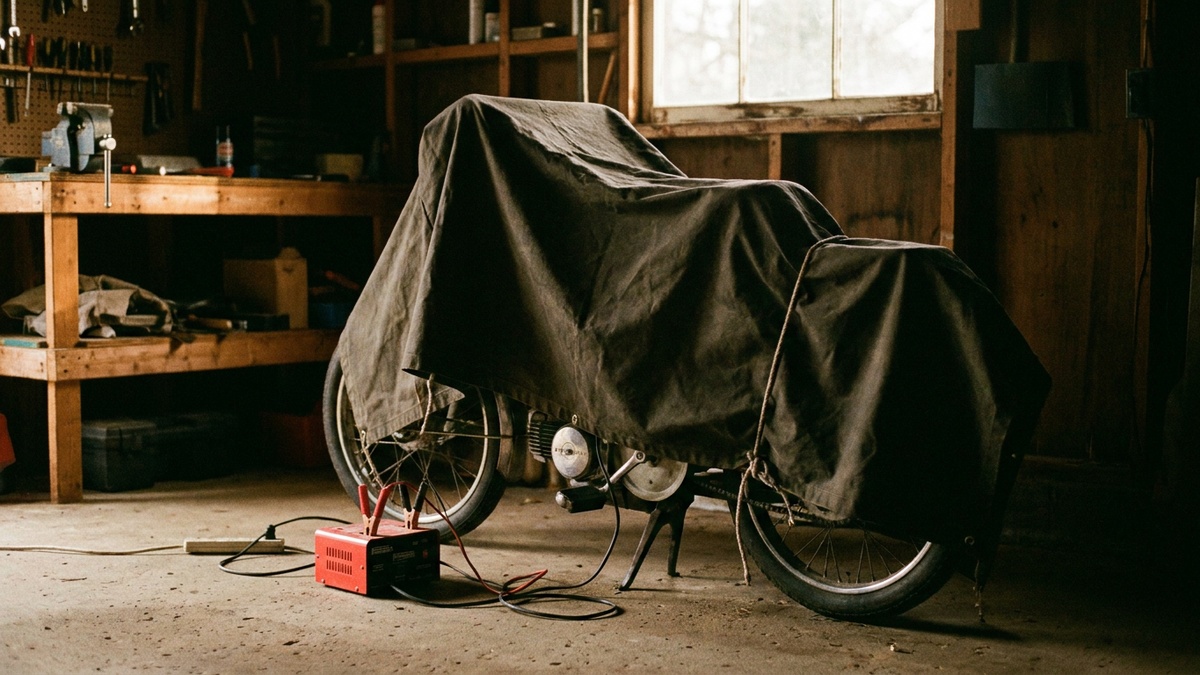
- Cover the moped with a plain cloth (a cotton bedsheet works well) so dust doesn't eat into the paintwork and the seat upholstery.
- Fill the tank to the top with gasoline so it doesn't rust inside. Alternatively, you can drain the gasoline and pour in 0.5 L of oil.
- The storage room should be clean and dry, with good ventilation. Even better if it's heated.
- Unscrew the spark plug, pour 5-10 grams of oil into the cylinder with a syringe, and turn the engine over a couple of times.
- It's best not to drain the engine oil. If there was water in the cooling system, drain it and fill it with antifreeze.
That's it. By following these steps, you'll protect your scooter and keep it running well and looking good. It will repay the time and effort you've put in.